TECHNICAL GUIDE · GAS DETECTION
Fixed Hydrogen Sulfide (H2S) Gas Detection in Canada
H2S is one of the most dangerous gases in industry: toxic at low concentration, heavier than air, and impossible to detect reliably by smell. A fixed detector monitors the area continuously and raises the alarm before anyone enters.
Where H2S occurs
H2S forms when organic matter decomposes without oxygen, and it is a by-product of several industrial processes.
Wastewater
Lift stations, headworks, digesters, manholes and interceptors. The classic confined space hazard.
Pulp and paper
Kraft process, black liquor, lime kilns.
Oil and gas
Sour gas, separators, storage tanks, flare systems.
Agriculture and food
Manure pits, slurry agitation, animal by-products.
Landfill and biogas
Gas collection, flares, energy recovery systems.
Tanneries and chemicals
Reactions involving sulfides.
Fixed or portable?
A portable detector protects the person wearing it, while they are wearing it. A fixed detector protects the area, continuously, including when nobody is there. The two are complementary, not interchangeable.
Fixed detection is called for when the area is occupied intermittently and you need to know before entry, when the process can generate H2S without warning, when ventilation must be interlocked to a gas reading, or when an alarm must reach a control room.
Smell is not a detection system
H2S smells of rotten eggs at low concentration but causes olfactory paralysis at higher concentration: the smell disappears while the danger increases. That is precisely why instrumented measurement is required.
Sensor technology
H2S is measured with an electrochemical sensor. The cell contains an electrolyte; gas diffusing through a membrane generates a current proportional to concentration. Three characteristics to understand before specifying:
Finite service life
A cell is consumed whether gas is present or not. A few years depending on exposure, temperature and humidity, then replacement. Budget it as an operating cost, not just a purchase.
Cross sensitivity
H2S cells also respond, to varying degrees, to SO2, NO, NO2 and CO. Where those coexist in a process, account for it at design stage.
Periodic calibration
A bump test and full calibration at defined intervals keep the reading valid. Frequency depends on the manufacturer, the environment and your province.
How many detection points, and where
There is no universal formula: the number of points depends on the process, the volume, the ventilation and where people actually are. The principles that drive the design:
- Mount low. H2S is denser than air. It accumulates in pits, sumps, trenches, channels, the bottom of vessels. A ceiling sensor will not see an accumulation at floor level.
- Mount near sources. Joints, flanges, glands, vents, transfer points, access hatches.
- Mount at entry points. You want to know the state of the atmosphere before someone climbs down, not after.
- Account for ventilation. Airflow carries the gas. A sensor upstream of the plume will not see it in time.
- Design for maintenance access. A sensor that cannot be reached is a sensor that will not be calibrated.
Our application engineer validates your detection plan before you buy: gas list, number of points, locations and measuring ranges.
Exposure limits: check your province
H2S occupational exposure limits differ between provinces and are revised periodically. We do not reproduce them here, to avoid publishing a value that later goes out of date. Go to the official source for your jurisdiction:
RSST, Schedule I
WorkSafeNB, Occupational Exposure Limits
Workplace Health and Safety Regulations
OHS Act General Regulations
OHS Regulations, 2012
Ontario and Quebec publish their own tables; the Atlantic provinces rely largely on ACGIH values. Your alarm setpoints should follow the regulation that applies to you, not a generic figure.
Prosense detectors for H2S
Two models cover the large majority of fixed H2S applications.
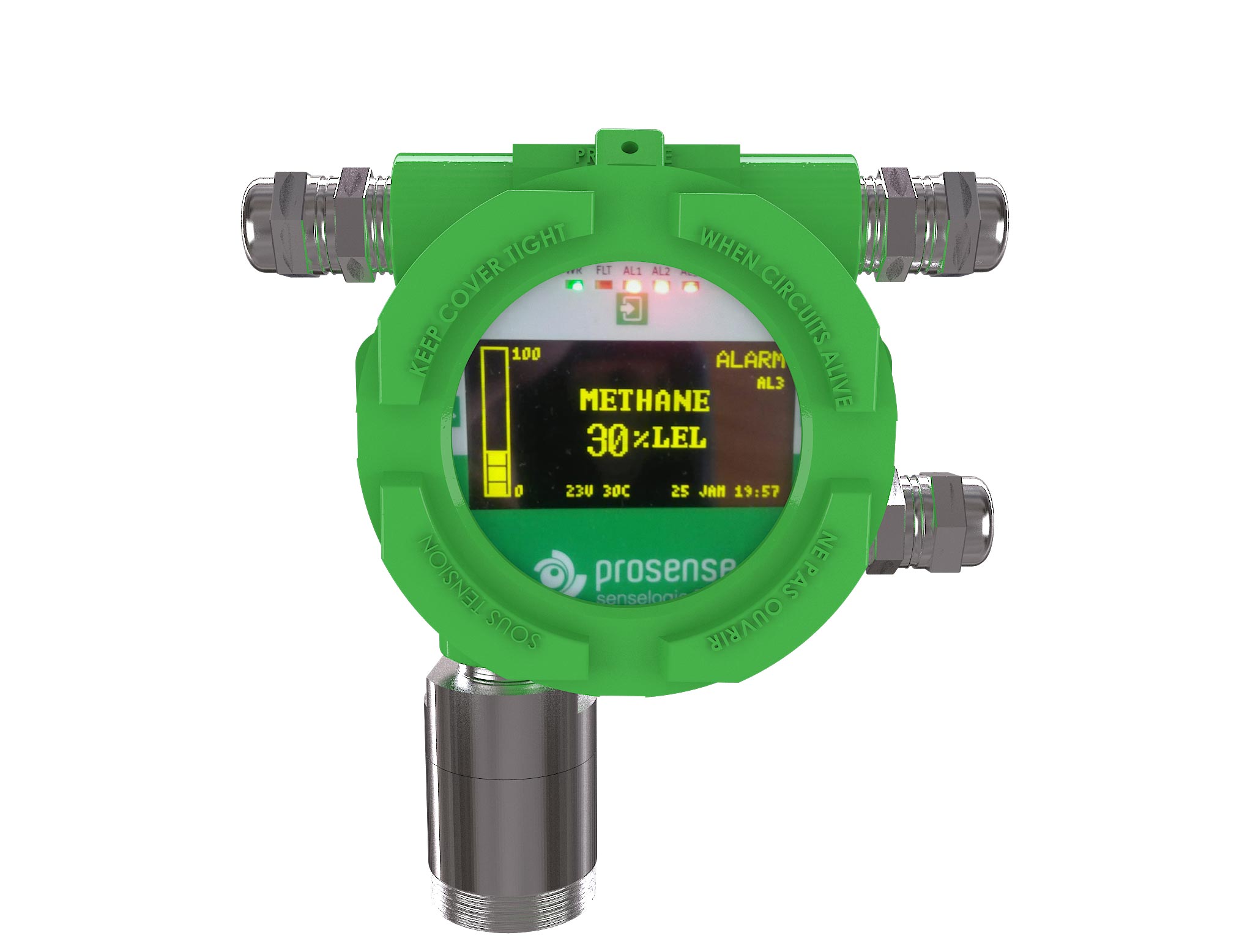
PQD-S-6434 · with display
Electrochemical sensor, integrated OLED display and alarm LEDs. 4-20 mA and RS485 outputs standard, relay optional. Explosion-proof housing in aluminium or 316L stainless steel.
Nine ranges from 0-10 ppm to 0-3000 ppm.
PQN-S-6434 · no display
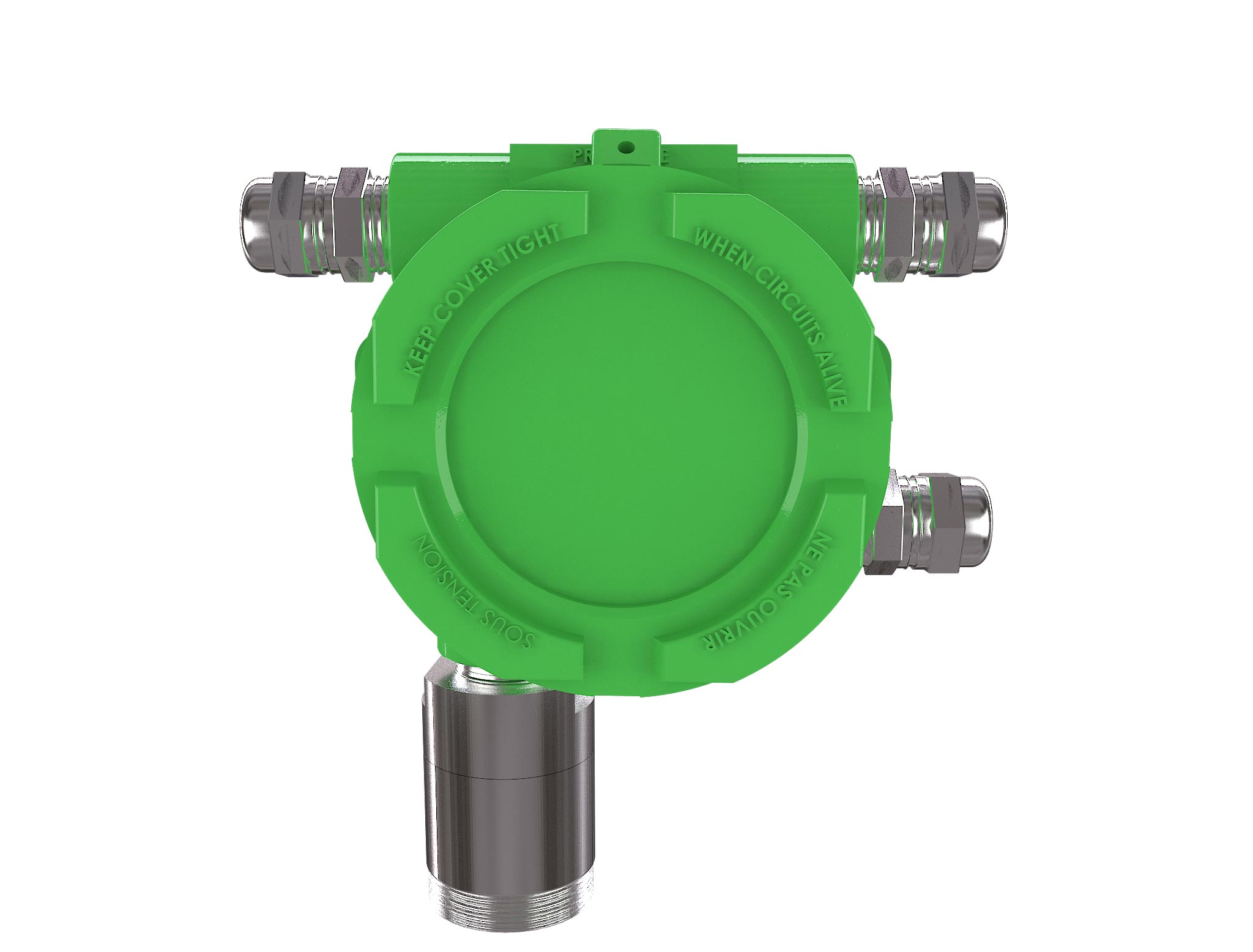
Same detection platform without the display, for installations where the reading is taken at the control panel. Same outputs, same housings, same ranges.
Nine ranges from 0-10 ppm to 0-3000 ppm.
Certifications on both models: ATEX, IECEx, UL, CSA, SIL2, SIL3, INMETRO, UKEX, ECASEx, EAC and MARINE.
Range selection matters: a 0-100 ppm unit and a 0-3000 ppm unit do not serve the same purpose. Confirm it with our application engineer before ordering.
Frequently asked questions
Fixed or portable, what is the difference?
A portable protects the person wearing it while they wear it. A fixed unit monitors an area continuously, including when unoccupied, and can trigger ventilation or a remote alarm.
Can you rely on smell?
No. H2S causes olfactory paralysis: at higher concentration the smell stops being perceived while the danger increases.
High or low mounting?
Low. H2S is heavier than air and collects in low points. Exact height depends on the geometry of the space and the ventilation.
How often does it need calibration?
It depends on the manufacturer, the environment and your provincial requirements. A regular bump test between full calibrations is common practice.
How long does a sensor last?
An electrochemical cell has a finite service life, on the order of a few years depending on exposure, temperature and humidity.
Can it respond to other gases?
Yes. Electrochemical H2S cells show cross sensitivity to SO2, NO, NO2 and CO. Account for it at design stage.
Which range should I choose?
The range should match the actual risk in your process and the alarm setpoints you must meet. Nine ranges are offered, from 0-10 ppm to 0-3000 ppm.
Certified for Canada?
Yes. The PQ and PX series are CSA and UL certified for the North American market, in addition to ATEX, IECEx, SIL2 and SIL3.
What is the delivery time?
Most units are built to your configuration. Delivery is confirmed at time of order.
Need help specifying H2S detection?
Open a client account for CAD pricing, online ordering, and an application engineer who validates your selection before you buy.